



When medical care goes wrong, the consequences can be life-changing. You may be facing unexpected health complications, mounting medical bills, or uncertainty about whether a provider’s mistake caused preventable harm. Many people are unsure where to turn or whether what happened even qualifies as medical malpractice.
Medical malpractice occurs when a doctor, hospital, or healthcare professional fails to follow accepted standards of care, and that failure results in injury. Not every poor outcome qualifies, but when negligence leads to serious harm, New York law may allow injured patients to seek compensation for medical costs, lost income, and future care needs.
At Stanley Law Offices, our Syracuse medical malpractice lawyer helps injured patients and families across Upstate New York evaluate potential claims, review medical records, and understand their legal options.
If you have concerns about a medical error, call 1-800-608-3333 for a free case evaluation. You can also visit our Syracuse office located at 215 Burnet Ave. Syracuse, NY 13203.
Unsure If Your Situation Qualifies as Medical Malpractice?
A treatment that did not work or a condition that worsened does not automatically mean medical malpractice occurred. Determining whether medical negligence may be involved requires looking at both how care was provided and whether legal standards can be met.
From a medical perspective, concerns often arise when one or more of the following 4 Cs are missing:
- Compassion: The provider failed to listen, dismissed symptoms, or ignored patient concerns.
- Communication: Important information, test results, risks, or follow-up instructions were not clearly explained.
- Competence: The provider lacked the skill, judgment, or training required for the situation.
- Charting: Medical records were incomplete, inaccurate, delayed, or inconsistent with the care provided.
From a legal standpoint, New York malpractice claims are evaluated using the 4 Ds:
- Duty: The healthcare provider agreed to treat the patient, creating a legal responsibility to provide appropriate medical care (a provider-patient relationship existed).
- Deviation: The provider made a mistake or failed to act in a way that a reasonably careful medical professional would have under similar circumstances.
- Direct Cause: The provider’s mistake directly led to the patient’s injury, rather than the injury being caused by the underlying illness alone.
- Damages: The patient experienced real, measurable harm, such as additional medical treatment, financial loss, or long-term health consequences.
Unsure how these factors apply? A legal review with our medical negligence lawyer can help clarify the next steps.
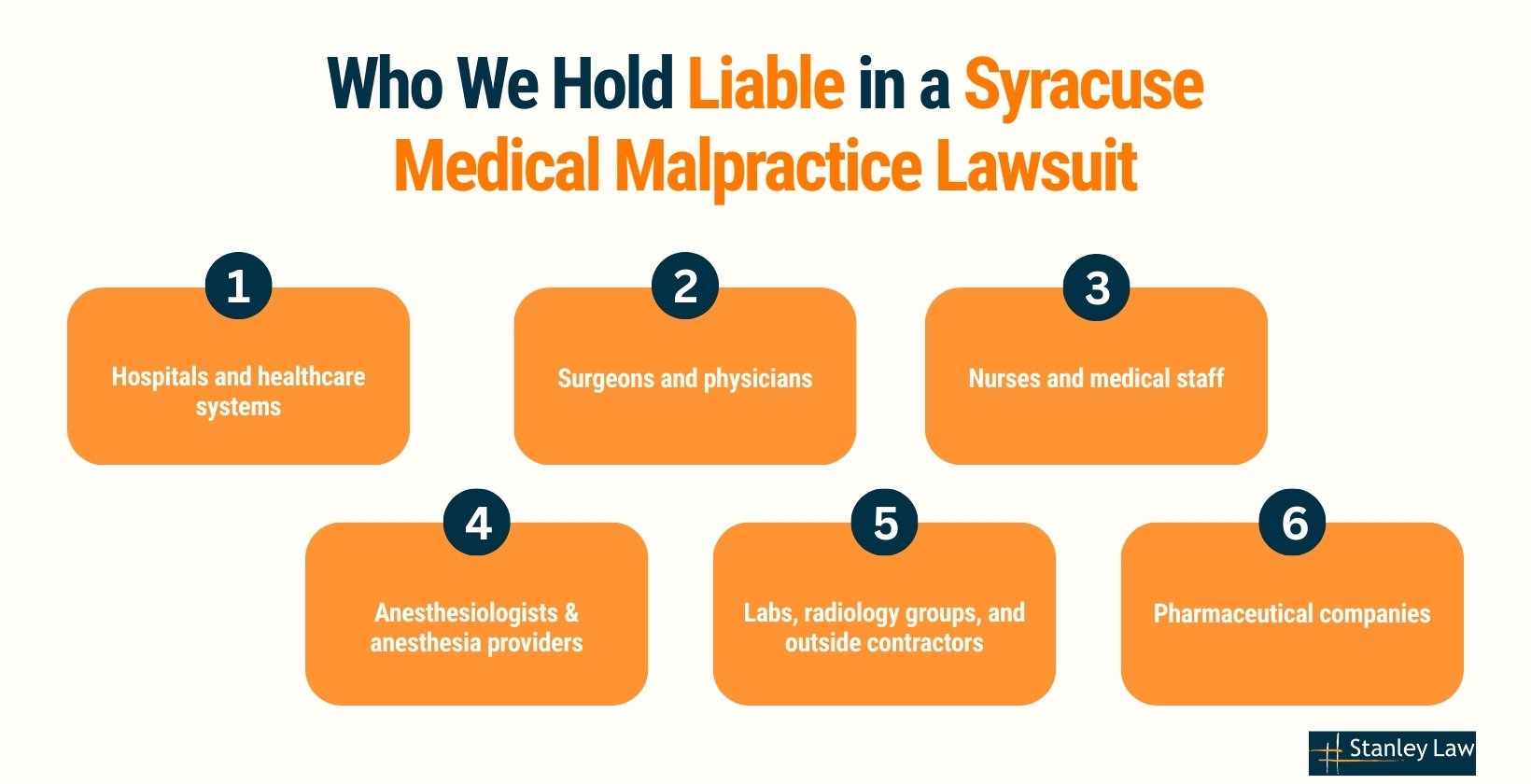
Who We Hold Liable in a Syracuse Medical Malpractice Lawsuit
A common misunderstanding is assuming only the treating doctor can be held responsible. In many medical malpractice cases, liability may extend to multiple individuals and organizations involved in your care. Identifying every responsible party often requires a close review of medical records, policies, staffing, and how care was delivered across the full treatment timeline.
Medical malpractice claims may involve one or more of the following liable parties:
- Hospitals and healthcare systems: System-wide failures such as understaffing, unsafe policies, negligent hiring, or inadequate supervision.
- Surgeons and physicians: Errors in diagnosis, judgment, technique, or follow-up care.
- Nurses and medical staff: Medication mistakes, missed warning signs, or failure to monitor and document changes in a patient’s condition.
- Anesthesiologists and anesthesia providers: Dosing, monitoring, or airway management mistakes that can cause serious injury.
- Labs, radiology groups, and outside contractors: Misread tests, delayed results, or breakdowns in communication that affect diagnosis and treatment decisions.
- Pharmaceutical companies: Defective drugs or inadequate warnings that contribute to patient harm.
If you are unsure who may be responsible in your situation, our Syracuse personal injury lawyer can review the facts and explain how liability is evaluated under New York law.
How a Syracuse Medical Malpractice Attorney Investigates and Pursues Claims
Medical malpractice cases involve detailed records, complex treatment decisions, and strict filing rules under New York law. Most patients and families do not have access to the information or resources needed to evaluate a potential claim on their own. That is where legal guidance becomes critical.
Here is how we help:
- Obtain and review medical records: We gather complete treatment records and identify gaps, inconsistencies, or decisions that may raise concerns about the care provided.
- Reconstruct the course of treatment: We organize events in the order they occurred to understand how medical decisions were made and where errors may have occurred.
- Address Certificate of Merit requirements: We consult qualified medical professionals or meet statutory conditions to satisfy New York’s Certificate of Merit requirement (a document required under New York law confirming that a qualified medical professional has reviewed the case and found a reasonable basis for a malpractice claim, or that statutory conditions apply) before filing a lawsuit.
- Prepare the claim for resolution or court review: We assemble medical evidence and expert input so the claim is properly positioned for negotiation or, when necessary, litigation.
Common Forms of Provider Negligence That Lead to Malpractice Claims
Medical negligence can take many forms and may occur at different stages of care, including diagnosis, treatment, medication management, or discharge planning. These issues often involve missed steps, poor clinical judgment, or breakdowns in communication rather than a single isolated mistake.
Examples of provider conduct that may support a medical malpractice claim include:
- Failure to follow established protocols: Ignoring accepted medical guidelines, safety procedures, or escalation steps when a patient’s condition changes.
- Inadequate monitoring or follow-up: Failing to track symptoms, test results, or post-treatment complications that require a timely response.
- Breakdowns in communication: Poor handoffs between providers, incomplete charting, or failure to share critical information with patients or care teams.
- Unsafe staffing or supervision: Understaffing, inadequate training, or lack of oversight that contributes to preventable errors.
- Lack of informed consent: Proceeding with treatment without clearly explaining material risks, alternatives, or expected outcomes.
Types of Medical Negligence Cases We Handle in Syracuse, New York
Medical malpractice can arise across many areas of care, particularly when serious conditions are mismanaged or critical decisions are delayed. Some cases involve catastrophic injury or loss of life, while others involve long-term health consequences that could have been avoided with proper care.
Medical negligence cases Stanley Law Offices commonly handles include:
- Hospital negligence: System-wide failures such as inadequate staffing, unsafe policies, delayed escalation of care, poor coordination between departments, or failure to monitor patients appropriately during admission or discharge.
- Birth injuries: Preventable injuries during pregnancy, labor, or delivery, including conditions linked to oxygen deprivation, improper use of delivery tools, or delayed emergency intervention.
- Cancer misdiagnosis or delayed diagnosis: Failure to identify cancer in a timely manner, allowing the disease to progress and limiting treatment options.
- Emergency room negligence: Missed or misjudged signs of stroke, heart attack, sepsis, or internal injury, including cases where patients are discharged too early.
- Diagnostic errors: Incorrect diagnoses, delayed diagnoses, or failure to order appropriate testing that leads to worsening medical outcomes.
- Surgical errors: Mistakes made before, during, or after surgery, including wrong-site procedures, retained surgical items, or avoidable complications.
- Anesthesia errors: Improper dosing, monitoring failures, or airway management mistakes that result in serious injury.
- Medication errors and monitoring failures: Prescribing the wrong medication, incorrect dosages, or failing to monitor patient reactions and interactions.
- Post-operative infections: Infections linked to inadequate sterile procedures, delayed treatment, or poor follow-up care.
- Radiology and lab errors: Misread imaging, delayed test results, or reporting failures that affect diagnosis and treatment decisions.
- Nursing home medical neglect: Failure to provide adequate medical care, monitoring, or treatment to elderly or dependent patients.
If your experience resembles any of these situations, it may be worth having the details reviewed. Reach out to us.
Compensation Available in Syracuse Medical Malpractice Cases
When medical negligence causes harm, New York law allows eligible patients to seek compensation intended to address both financial losses and the personal impact of the injury. The types of damages available depend on the facts of the case, medical evidence, and applicable law.
Compensation in a medical malpractice lawsuit includes:
- Economic damages (financial losses):
- Past medical bills, including hospital stays, procedures, and follow-up care
- Future medical expenses, such as ongoing treatment, surgeries, or specialist care
- Rehabilitation and therapy costs, including physical or occupational therapy
- Prescription medication and medical supply expenses
- Lost wages for time missed from work during recovery
- Loss of earning capacity when an injury limits the ability to work or earn income long term, such as when permanent complications prevent a return to the same job or career path
- Non-economic damages (personal impact):
- Physical pain and discomfort
- Emotional distress and mental suffering
- Loss of enjoyment of life
- New York does not impose a statutory cap on non-economic damages in medical malpractice cases
- Punitive damages (limited and uncommon):
- These damages are intended to punish especially reckless or willful misconduct and deter similar behavior.
- For example, punitive damages may be considered if a provider knowingly ignored a serious safety risk or deliberately altered medical records to conceal dangerous conduct.
- Punitive damages are awarded only in rare circumstances and are not available in most malpractice cases.
The availability and scope of damages depend on the specific facts of the injury.
New York Medical Malpractice Laws, Deadlines, and Filing Requirements
Medical malpractice claims in New York are governed by strict filing deadlines. Missing a required deadline can prevent a claim from being filed, regardless of how serious the injury may be. Understanding which time limits apply is an important first step in evaluating a potential case.
Key deadlines and rules include:
- Standard statute of limitations: In most medical malpractice cases, a lawsuit must be filed within 2.5 years (30 months) from the date the malpractice occurred.
- Lavern’s Law (cancer misdiagnosis): In certain cancer misdiagnosis cases, the filing period may begin when the patient discovers, or reasonably should have discovered, the misdiagnosis rather than when it occurred, subject to a seven-year outer limit.
- Foreign object rule: If a surgical object, such as a sponge or instrument, is left inside a patient’s body, a claim generally must be filed within one year from the date the object is discovered.
- Claims involving public or state-run facilities: When malpractice involves a municipal or state-operated hospital or provider, additional notice requirements may apply, and deadlines can be as short as 90 days to file a formal Notice of Claim.
Because filing deadlines vary, understanding which time limits apply often depends on the specific facts involved.
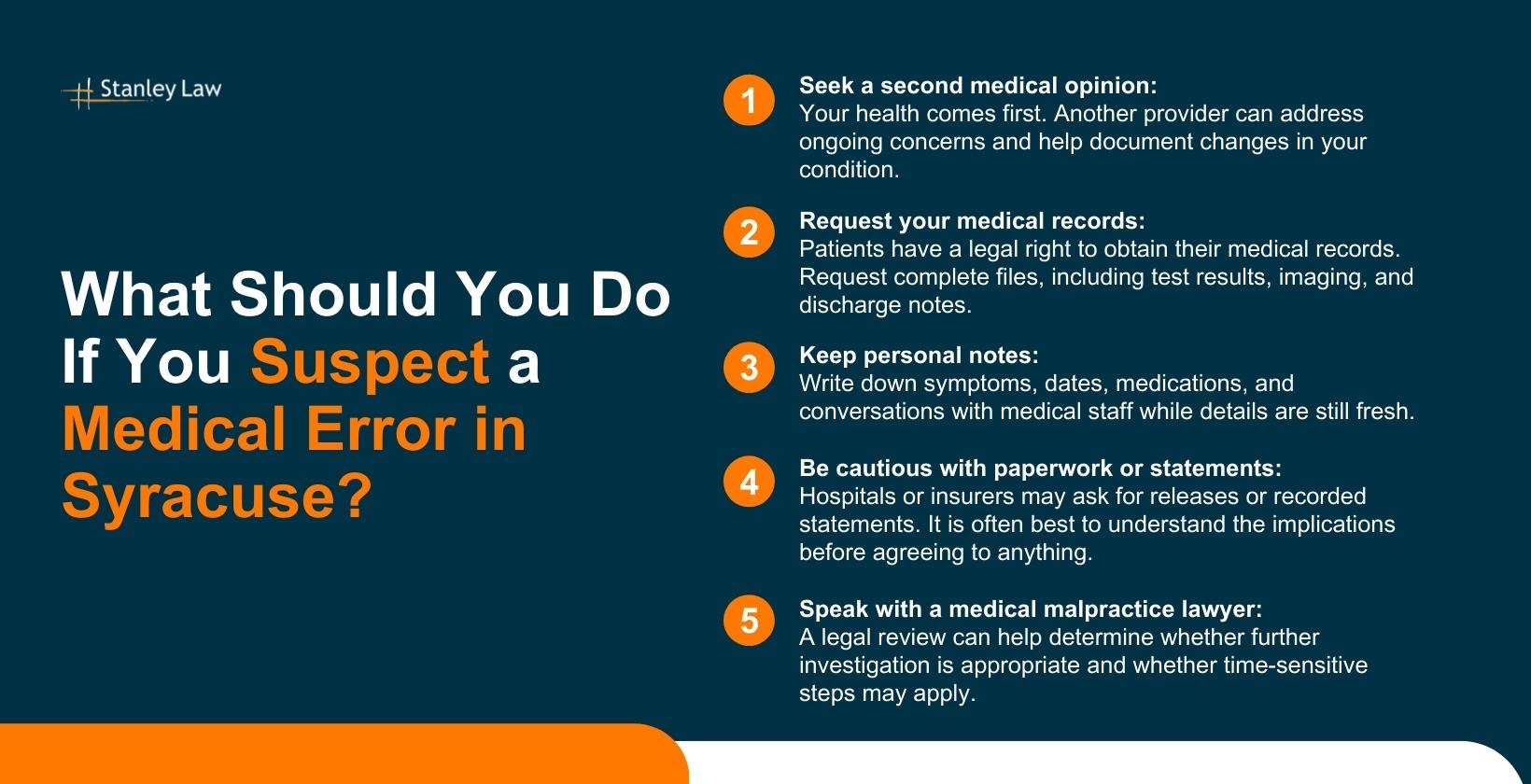
What Should You Do If You Suspect a Medical Error in Syracuse?
If you believe a medical error may have occurred, taking a few measured steps can help protect both your health and your ability to understand what happened.
- Seek a second medical opinion: Your health comes first. Another provider can address ongoing concerns and help document changes in your condition.
- Request your medical records: Patients have a legal right to obtain their medical records. Request complete files, including test results, imaging, and discharge notes.
- Keep personal notes: Write down symptoms, dates, medications, and conversations with medical staff while details are still fresh.
- Be cautious with paperwork or statements: Hospitals or insurers may ask for releases or recorded statements. It is often best to understand the implications before agreeing to anything.
- Speak with a medical malpractice lawyer: A legal review can help determine whether further investigation is appropriate and whether time-sensitive steps may apply.
Why Syracuse Clients Choose Stanley Law Offices for Medical Negligence Cases
Medical malpractice claims involve complex medical issues, expert review, and strict procedural rules under New York law. Clients often look for legal representation with the experience and resources to handle these demands carefully and thoroughly.
- Focused medical malpractice preparation: We handle medical negligence matters with the level of preparation these cases require, including detailed record review and coordination with qualified medical professionals to evaluate whether care fell below accepted standards.
- Board-certified trial experience: Joe Stanley is Board Certified in Civil Trial Practice by the American Board of Trial Advocacy.
- Local court familiarity: Based in Syracuse, we are familiar with Onondaga County courts, local procedures, and how medical malpractice claims are commonly defended in this area.
- Accessibility for clients: When clients are unable to travel, we arrange meetings at home, in the hospital, or through virtual consultations when appropriate.
- Representative case: In one matter, a hospital failed to diagnose compartment syndrome, resulting in a permanent partial loss of use of a patient’s leg. The claim resolved for $475,000. Past results do not guarantee future outcomes.
Speak With a Syracuse Medical Malpractice Attorney
When medical care does not go as expected, it can be hard to determine whether a medical error occurred. A brief legal review can help clarify whether further action may be appropriate under New York law.
At Stanley Law Offices, our medical error lawyer offers free case reviews for patients and families with concerns about medical negligence. There are no upfront legal fees, and cases are handled on a contingency fee basis.
- Call to Discuss Your Situation: 1-800-608-3333
- Visit Our Syracuse Office: 215 Burnet Ave, Syracuse, NY 13203
- Online Case Review: Request a Free Case Evaluation