




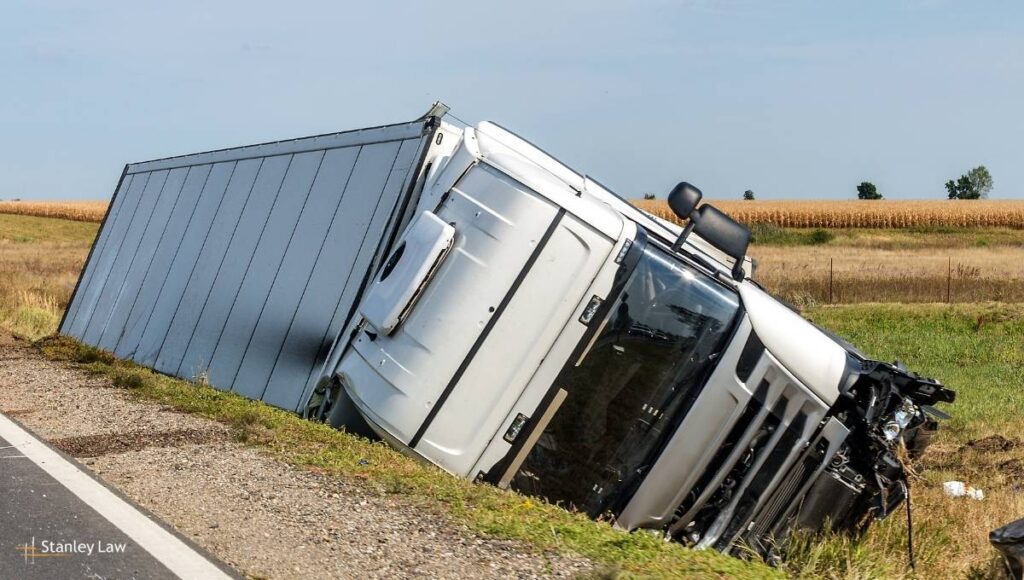
A truck accident can leave you dealing with serious injuries, medical bills, and pressure from insurance companies. Crashes involving semi-trucks, tractor-trailers, big-rigs, or 18-wheelers often involve federal trucking regulations, layered insurance coverage, and evidence that is controlled by the trucking company.
Truck crashes in Binghamton frequently occur along I-81, Route 17, and the I-81 and NY-17 interchange known as the Kamikaze Curve. Others happen on local roads when delivery trucks or commercial vehicles navigate tight intersections or construction zones. Key evidence can be lost quickly if it is not preserved early.
At Stanley Law Offices, our Binghamton truck accident lawyers bring more than 90 years of combined experience. We investigate commercial truck crashes, identify all responsible parties, preserve critical evidence, and evaluate the compensation that may be available based on your injuries and losses.
If you are unsure whether you have a valid claim, call us for a free consultation or visit our office located at 84 Court St, Ste 414, Binghamton, NY 13901.
Why You Need to Act Immediately: The “Black Box” Data
In a standard crash, evidence is often limited to skid marks, photographs, and a police report. In a truck accident, however, some of the most important evidence is digital and controlled by the trucking company or its insurer. If action is not taken early, certain records may be lawfully deleted or overwritten.
The 6-Month Destruction Rule (Federal Law)
Under the Federal Motor Carrier Safety Administration (FMCSA) regulations (49 CFR § 395.8), motor carriers are generally required to retain driver logs and supporting documents for a limited period, often up to six months, depending on the record type and format.
Once that retention period expires, those records may no longer be available unless steps are taken to preserve them.
The “Black Box” (ECM) Is Even Riskier
Unlike driver logs, the truck’s Electronic Control Module (ECM), sometimes referred to as the “black box,” is not subject to a specific federal retention requirement. This system can record critical vehicle data in the moments leading up to a collision, including vehicle speed, braking activity, engine RPMs, and throttle position.
If the truck is repaired or returned to service, this data can be overwritten in a short period of time.
How We Protect Evidence: The Spoliation Letter
At Stanley Law Offices, our experienced truck crash attorneys in New York do not wait for trucking companies or insurers to voluntarily preserve evidence. When we are retained, we send formal spoliation of evidence letters to all relevant parties. These letters place them on notice of a potential claim and request that key materials be preserved, including:
- ECM or vehicle control data
- Driver qualification and training records
- In-cab or dash camera footage
Taking early action can help prevent the loss of information that may be important to understanding how the crash occurred.

High-Risk Trucking Routes in Binghamton & Broome County
Binghamton is often described as the “Crossroads of the Southern Tier,” funneling heavy commercial freight traffic between New York City, Pennsylvania, and Canada. The convergence of multiple highways and local corridors creates a high-density zone for catastrophic truck collisions involving tractor-trailers, delivery trucks, and other commercial vehicles.
The “Kamikaze Curve” (I-81 & NY-17 Junction)
The interchange near Prospect Mountain is one of the most challenging driving areas in the region. Sharp curves, shifting lanes, and sudden changes in traffic flow can increase the risk of jackknife accidents, sideswipes, and rollovers involving large trucks, even with ongoing infrastructure improvements.
Interstate 88 (I-88)
The rural stretch of I-88 leading out of Broome County presents different risks than urban highways. Long distances, limited lighting, and fewer exit points can contribute to driver fatigue. Truck accidents on this route often raise questions about compliance with federal Hours of Service rules and required rest breaks.
Local Arteries (Front Street & Vestal Parkway)
Not all serious truck accidents occur on highways. Local roads such as Front Street and the Vestal Parkway (Route 434) see frequent commercial vehicle traffic mixed with passenger cars and pedestrians. Collisions in these areas often involve:
- Delivery Trucks: (FedEx, UPS, Amazon) making rapid stops.
- Box Trucks: Navigating tight turns in heavy commuter traffic.
- Construction Vehicles: Entering and exiting work zones without proper signaling.
Types of Truck Accidents We Handle in Binghamton, NY
Truck accidents can occur in many different ways, and the type of collision often determines what evidence matters most and who may be legally responsible. Some of the most common truck accident types we see in Binghamton and throughout Broome County include:
- Jackknife Accidents: Occur when a truck’s trailer swings out to the side, forming an angle with the cab. These crashes often block multiple lanes and involve several vehicles.
- Rear-End Truck Collisions: Because of their size and stopping distance, commercial trucks can cause severe rear-end crashes when traffic slows or stops unexpectedly.
- Underride Accidents: Happen when a smaller vehicle slides beneath the rear or side of a truck, often resulting in catastrophic or fatal injuries.
- Rollover Accidents: Can occur due to excessive speed, sharp turns, or improperly secured cargo, placing nearby drivers at risk.
- Wide-Turn (Right-Turn) Accidents: Occur when a truck swings left before turning right and strikes vehicles traveling alongside it, a common issue on local roads and intersections.
- Override Accidents: Happen when a truck rides up over a smaller vehicle during a collision, often in high-speed traffic.
- Cargo Shift or Load-Related Accidents: Improperly loaded or unsecured cargo can shift during transit, causing loss of control or rollovers.
- Blind Spot (No-Zone) Accidents: Large trucks have significant blind spots where drivers cannot see nearby vehicles, increasing the risk of collisions during lane changes or turns.
Common Causes of Truck Crashes in Binghamton
Truck accidents often result from a combination of driver conduct, vehicle condition, and roadway factors. Some of the most common causes include:
- Fatigued Driving: Federal regulations limit most commercial drivers to 11 hours of driving time. However, pressure to meet delivery schedules can lead drivers to exceed those limits or fail to take required rest breaks, particularly on long rural stretches such as I-88.
- Winter Weather Conditions: The Southern Tier is prone to lake-effect snow, freezing rain, and black ice. Commercial drivers are expected to adjust their driving or pull over when conditions become unsafe. Failing to do so can increase the risk of serious crashes.
- Brake Failure on Grades: Heavy trucks require significantly more distance to stop. Poorly maintained brakes can fail on the steep downhill grades common in Broome County, leading to runaway truck scenarios.
- Distracted Driving: Despite federal restrictions, truck drivers may become distracted by mobile devices, dispatch systems, or GPS equipment while the vehicle is in motion.
- Improper Lane Changes and Blind Spots: Semi-trucks have large blind spots, often referred to as “no-zones.” Failing to properly check mirrors or account for surrounding traffic during lane changes or merges on roads like Route 17 or near the Kamikaze Curve can lead to sideswipe collisions.
Injuries Commonly Seen in Truck Accident Claims
Collisions involving semi-trucks, tractor-trailers, and other commercial vehicles often produce injuries that are more severe than those seen in ordinary traffic crashes. The size, weight, and stopping distance of these vehicles increase the force transferred to occupants of smaller vehicles at impact.
Some of the injuries most frequently involved in truck accident claims include:
- Traumatic Brain Injuries (TBI): Including concussions and more severe brain trauma caused by sudden impact or violent movement of the head.
- Spinal Cord and Back Injuries: Herniated discs, vertebral fractures, and spinal cord damage that may result in long-term mobility limitations or paralysis.
- Neck and Soft Tissue Injuries: Cervical spine injuries, ligament damage, and nerve compression that can cause chronic pain or restricted movement.
- Orthopedic Injuries: Fractures to the arms, legs, hips, or pelvis, often requiring surgical repair and extended rehabilitation.
- Internal Injuries: Damage to organs such as the lungs, liver, or spleen that may not be immediately apparent but require urgent medical treatment.
- Crush Injuries and Amputations: Injuries caused by vehicle intrusion or being pinned during a collision, sometimes resulting in permanent impairment.
- Burns or Lacerations: Injuries caused by fuel fires, chemical spills, or shattered glass and metal.
The nature and severity of an injury often influence liability analysis, insurance coverage, and whether a claim meets New York’s legal thresholds for recovery. Medical documentation and early evaluation play a critical role in understanding both short- and long-term effects.

Who May Be Liable for Your Truck Accident?
In a commercial trucking case, liability is often split among multiple powerful defendants. To secure full compensation, we must identify every party responsible for the crash.
Our Binghamton truck accident lawyer investigates all potential defendants:
- The Truck Driver: Can be responsible for negligent conduct such as speeding, distracted driving, impairment, or driving while fatigued.
- The Trucking Company (Motor Carrier): Can be responsible for negligent hiring or supervision, inadequate training, or policies that encourage drivers to violate federal Hours of Service requirements.
- Freight Loaders or Cargo Handlers: Improperly loaded or unsecured cargo can shift during transit, increasing the risk of rollovers or jackknife accidents.
- Truck or Parts Manufacturers: Defective components, including brakes, tires, or steering systems, may give rise to product liability claims.
- Third-Party Maintenance Providers: Independent repair shops or fleet maintenance companies may be responsible for negligent inspections, worn braking systems, lighting failures, or other mechanical issues.
- Truck and Trailer Owners: In some cases, the entity operating the truck does not own the tractor or trailer. Separate owners may be responsible for unsafe equipment or deferred maintenance.
- Freight Brokers or Shipping Companies: When brokers or shippers exert control over delivery schedules, routes, or carrier selection, they may share responsibility for crashes tied to unrealistic deadlines or unsafe loading practices.
- Leasing Companies or Equipment Lessors: Commercial vehicles leased under long-term agreements must still meet federal safety standards. Lessors may be liable for defective equipment or failure to enforce maintenance obligations.
- Municipal or Government Entities: If a crash was caused by poor road design, inadequate signage, or unsafe construction zones, a government entity may bear responsibility. These claims are subject to strict notice deadlines under New York law.
Our New York truck accident lawyer examines the full corporate and operational chain behind a commercial vehicle, not just the driver behind the wheel.
Recoverable Damages in Truck Accident Claims
Truck accidents often result in serious injuries that carry both immediate and long-term consequences. In these cases, damages are evaluated based on the medical treatment required, the impact on income and earning ability, and the overall effect the injuries have on daily life.
Types of compensation our truck accident lawyer pursues:
- Current Medical Expenses: Emergency care, hospital stays, surgeries, diagnostic testing, and related medical treatment.
- Future Medical Costs: Ongoing or anticipated care such as physical therapy, follow-up procedures, home nursing services, and necessary home or mobility modifications.
- Lost Wages: Income missed while recovering or attending medical treatment.
- Loss of Earning Capacity: Reduced ability to earn income when injuries limit or prevent a return to previous work or job duties.
- Pain and Suffering: Non-economic damages related to physical pain, emotional distress, and the impact of the injuries on daily life.
In cases involving permanent or long-term injuries, life care planners may be consulted to project anticipated medical and support needs over time. These assessments help evaluate future costs associated with ongoing care.
Steps to Take Immediately After a Truck Accident
After an 18-wheeler accident, certain steps can help protect your health and preserve important information related to a potential claim. If you are unable to take these steps due to injury, a family member or attorney may be able to assist.
- Call 911: Request that local law enforcement or New York State Troopers respond to the scene and prepare an official accident report.
- Seek Medical Attention: Even if symptoms seem minor, seek medical care as soon as possible. Adrenaline can delay pain, and early treatment creates important medical documentation. Emergency care may be provided at UHS Wilson Medical Center in Johnson City or Lourdes Hospital.
- Document the Scene: If it is safe to do so, take photographs of the vehicles, roadway conditions, skid marks, the truck’s DOT number, and license plates.
- Identify Witnesses: Obtain names and contact information for anyone who witnessed the crash.
- Avoid Statements About Fault: Do not apologize or speculate about speed, distance, or responsibility when speaking with others at the scene.
- Limit Social Media Activity: Avoid posting about the accident or your injuries. Insurance companies may review public posts during claim investigations.
- Contact a Lawyer: Contact our Binghamton personal injury lawyer before speaking to the trucking company’s insurance adjuster.

Why Choose Stanley Law Offices for Your Truck Collision Case in New York
When someone is hurt in a truck accident, they usually want clear answers and steady guidance. At Stanley Law Offices, our NY truck accident lawyers focus on understanding what happened, protecting the evidence, and preparing each case as if it may need to be proven in court.
- Trial-Focused Leadership: Our firm is led by Joe Stanley, a Board Certified Civil Trial Attorney. From the start, we approach truck accident cases with a trial mindset, even when a case may ultimately resolve without going to court.
- Thorough Case Preparation: Commercial trucking accident claims often require more than a basic investigation. Depending on the facts, we work with investigators and technical professionals to examine how the crash occurred and who may be responsible.
- Experience With Commercial Insurance Claims: Trucking cases often involve large insurance carriers and layered coverage. We are familiar with how these claims are defended and what documentation is typically required to move them forward.
- Practical Use of Technology: We provide clients with access to the Stanley Law Accident App, which allows photos, documents, and other information to be shared securely as the case develops.
- Contingency Fee Representation: Our experienced truck accident lawyer handles truck accident cases on a contingency fee basis. That means there is no upfront legal fee, and attorney fees are addressed through a written agreement if a recovery is obtained.
What to Expect After You Hire Our Binghamton Truck Accident Lawyers
A common question is what happens once a personal injury lawyer is retained. After we take on a truck accident case, our focus is on preserving evidence, identifying all potentially responsible parties, and managing communications with insurance companies so you are not placed under unnecessary pressure.
Early Case Actions (First Few Days)
- Spoliation letters sent to request preservation of vehicle data, driver logs, and any available video.
- Coordination with reconstruction professionals when appropriate.
- Notice provided to trucking companies and insurers.
Investigation and Claim Development
- Review of driver qualification files, maintenance records, and inspection reports.
- Evaluation of FMCSA compliance and carrier safety history.
- Collection of medical records and documentation of injuries and losses.
Resolution or Litigation
- Preparation and submission of a demand package supported by the available evidence.
- Direct negotiations with commercial insurers.
- Litigation and trial preparation if a fair resolution is not reached.
Throughout the process, we keep you informed and involved in all major decisions.
Get a Free Consultation With Our Truck Accident Lawyer Today
If you were injured in a truck accident, it is reasonable to have questions about medical bills, insurance, and whether you have a valid claim. A consultation allows you to discuss what happened and understand your options before deciding what to do next.
At Stanley Law Offices, our trusted Binghamton attorney represents injured individuals throughout Binghamton and the surrounding Upstate New York area. There is no cost to speak with us and no obligation to move forward. You can call 1-800-608-3333 or fill out our contact form to request a confidential consultation.
