
Filing a Workers’ Comp Claim in New York often starts with reporting the injury to your employer or supervisor and getting medical care. Workers’ compensation is a no-fault system that covers treatment and replaces part of your wages when a job injury or job-related illness keeps you away from work. Most employees qualify, including full-time and part-time workers, though coverage questions may come up for independent contractors.
Whether the work injury happened in Syracuse, Binghamton, or elsewhere in New York, the process usually follows the same basic order: give your employer notice within 30 days, get checked by a medical provider so the injury is documented, file Form C-3 with the New York Workers’ Compensation Board within the required time limits, and provide follow up details if the employer or insurance carrier asks.
If there is a dispute, the claim may move into medical evaluations and hearings before benefits are decided.
Key Deadlines for a New York Workers’ Comp Claim
| Action | Deadline | Relevant Form |
|---|---|---|
| Notify Employer | Within 30 Days of Injury | Written Notice |
| Employer Reports to Board | Within 10 Days of Notice | Form C-2F |
| Doctor Reports Injury | Within 48 Hours of Treatment | Form C-4 |
| File Employee Claim | Within 2 Years of Injury | Form C-3 |
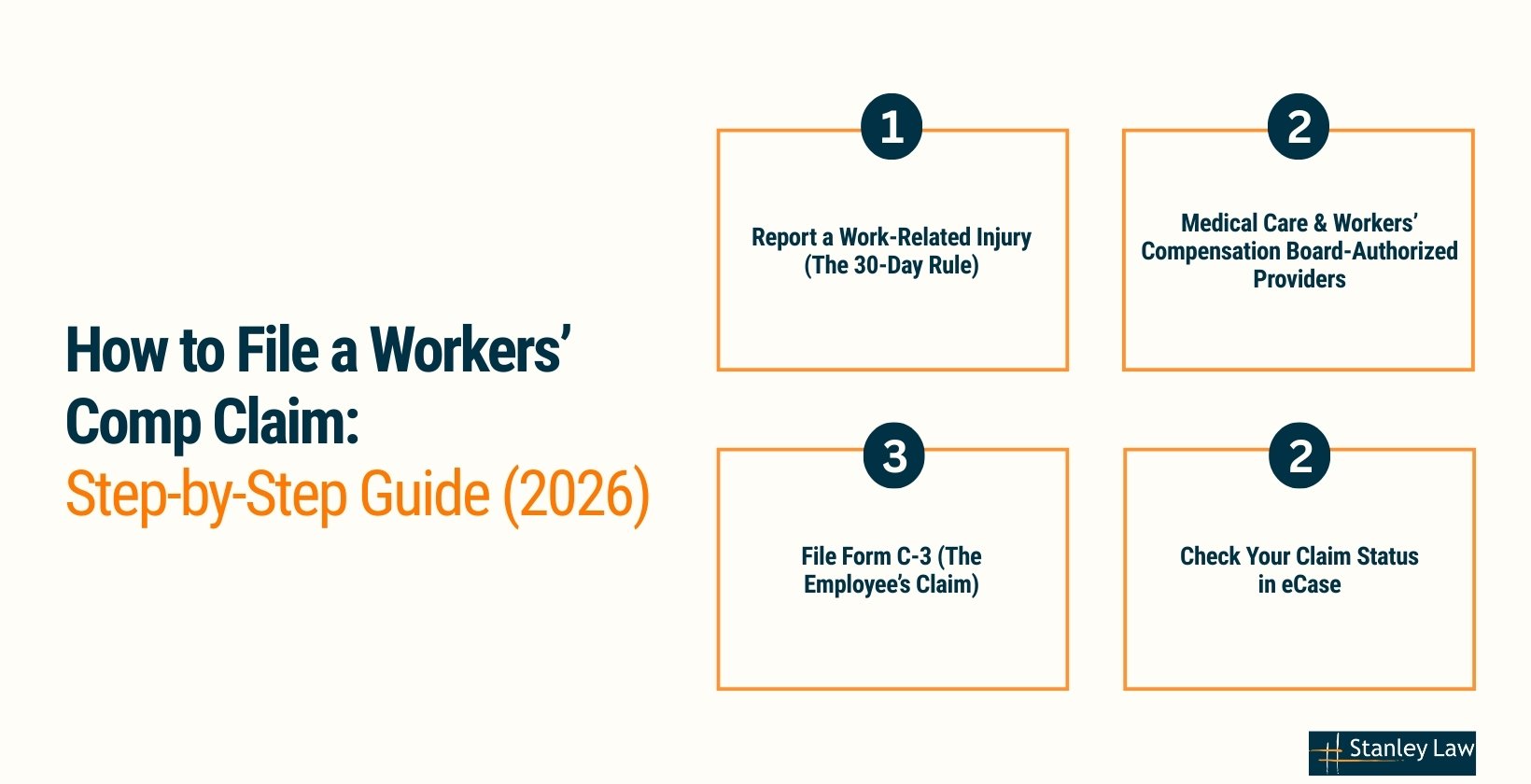
Step 1: Report a Work-Related Injury (The 30-Day Rule)
After a work injury or a work-related illness, one of the first things to do is notify your employer. In New York, workers generally must give the employer notice within 30 days. If you can, put it in writing (email or text is fine) so there is a clear record of what you reported and when.
When you report it, keep it simple:
- Who you told: your supervisor, manager, HR, or whoever handles injury reports
- What happened: the basic facts, not a long story
- When and where: date, time, and location
- How it ties to work: what task were you doing
- Witnesses: names, if anyone saw it
If the injury is an emergency, get medical care first, then report it as soon as you are able.
Step 2: Medical Care & Workers’ Compensation Board-Authorized Providers
After you report the injury, get checked by a medical provider so the injury is documented. If it is an emergency, go to the ER first and report it to your employer as soon as you are able. For follow-up care, New York generally expects treatment with a Workers’ Compensation Board-authorized provider. You can confirm a provider’s status through the Board’s search tool.
At your visit, tell the provider the injury is work-related and share your employer’s name. Ask for written work restrictions, visit summaries, and any referrals. Keeping those records in one place can prevent delays later if the insurance carrier asks for clarification.
Step 3: File Form C-3 (The Employee’s Claim)
Filing Form C-3 is the step that puts your claim in front of the New York Workers’ Compensation Board. Even if your employer reports the incident, you usually still need to file your own C-3 to protect your benefits.
If you previously injured the same body part or had a similar condition, you may also need Form C-3.3.
How to File Form C-3
You may file:
- Online through the Board’s Employee Claim Form C-3.
- Download Form C-3, complete it, sign and date it, and mail it to the Board’s Centralized Mailing Address. Make a copy for your records before you send it.
In person at your nearest Board office.
What You Will Need for the C-3
Have these details ready:
- Employer name and address
- Date and location of the injury or start of symptoms
- What you were doing at work, and what body parts were affected
- Wage information and pay schedule
- Where you first received treatment
Step 4: Check Your Claim Status in eCase
New York’s Workers’ Compensation Board has eCase, an online view of the case folder the Board uses to process claims. After you register and you are listed as a party of interest on the case, you may log in to see case documents and party contact information in the file. eCase is read-only, so you cannot change anything there, but it may show what has been received and whether a decision or hearing notice has been added.
What Happens After You File a Workers’ Comp Claim
After you file Form C-3, a case is opened, and the insurance carrier begins its review. If the carrier accepts the claim and you have lost time that qualifies for wage benefits, the first payments are generally expected within 18 days of the injury or 10 days after your employer became aware of the injury.
If the carrier disputes the claim, it generally must file a notice of controversy (denial) within 18 days after disability begins or 10 days after learning of the injury or illness.
Importance of Deadlines
Missing deadlines can harm your claim, causing delays or denials. Mark all relevant dates and set reminders. For example, late submission of the initial claim form can forfeit certain benefits, and delaying reporting to your employer may hinder proving the injury’s work-relatedness.
Administrative Review
The insurance carrier will review the C-2F (from your employer), the C-4 (from your doctor), and your C-3. They may compare to confirm:
- The injury happened during the course of employment.
- The medical evidence supports work restriction or time missed.
The Independent Medical Exam (IME)
The carrier may also schedule an Independent Medical Exam with a doctor other than your treating provider. Current New York rules require at least seven business days’ notice before the appointment, and you may bring someone with you.
Types of Benefits Available Through Workers’ Compensation
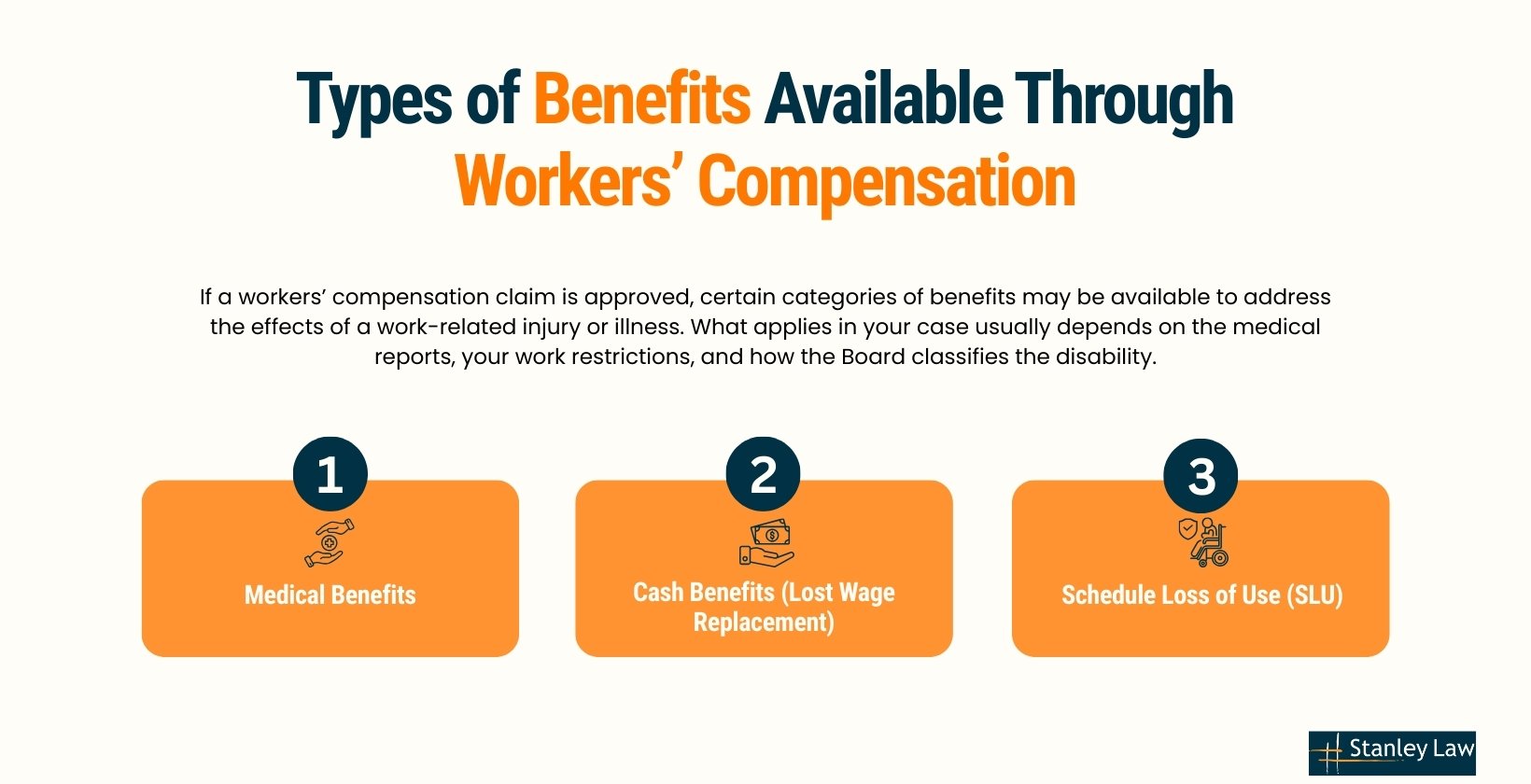
If a workers’ compensation claim is approved, certain categories of benefits may be available to address the effects of a work-related injury or illness. What applies in your case usually depends on the medical reports, your work restrictions, and how the Board classifies the disability.
Medical Benefits
Workers’ comp medical care covers treatment tied to the work injury or illness, like doctor visits, surgery, prescriptions, and rehab. Outside of emergencies, New York usually expects treatment with a Workers’ Compensation Board-authorized provider, and that provider sends medical reports to the Board and the insurer. In most cases, you should not have to pay out of pocket for approved treatment.
Schedule Loss of Use (SLU)
An SLU award is a cash benefit that may apply when a work injury leaves a permanent loss of function in certain body parts, such as an arm, hand, leg, foot, eyesight, hearing, or certain disfigurement areas. SLU awards are usually considered after you reach maximum medical improvement and a medical report is submitted using the current impairment guidelines. The amount is based on a schedule in the law, your loss of function percentage, and your average weekly wage.
Common Issues That Can Delay or Complicate a Workers’ Comp Claim
Most delays come from timing, missing paperwork, or medical records that do not line up with what was reported. A claim may also get disputed when the carrier says the injury was not tied to work or the medical support is not strong enough.
Common issues include:
- Late notice to the employer: Waiting past the 30-day notice window can create problems.
- Work connection is disputed: For example, the carrier argues it happened off duty, during a break, or it is mostly a prior condition.
- Gaps in medical care or missing reports: If treatment starts late or records are incomplete, the claim can slow down.
- Details do not match: Dates, body parts, job duties, or the injury description change between your report, Form C-3, and the medical notes.
- Missed appointments set by the carrier: Not showing up to an IME can trigger benefit interruptions.
If you receive a denial notice, you have the right to appeal and request a hearing before a Workers’ Compensation Law Judge at your local District Office (e.g., on James St. in Syracuse or Hawley St. in Binghamton).
What to Do If Your Claim Is Disputed or Denied
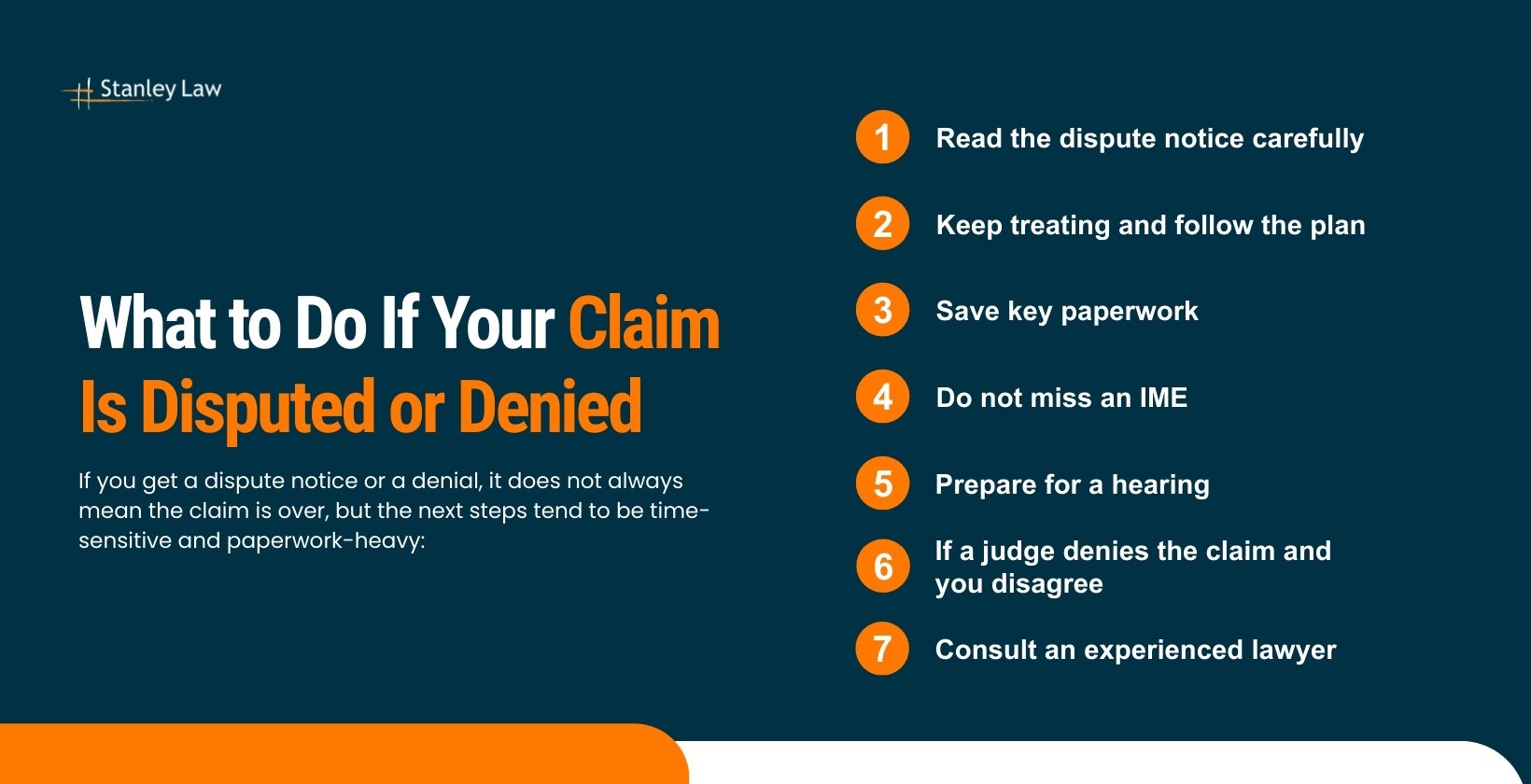
If you get a dispute notice or a denial, it does not always mean the claim is over, but the next steps tend to be time-sensitive and paperwork-heavy:
- Read the dispute notice carefully: Identify what the carrier is challenging (work-relatedness, medical support, disability level, wages, or something else).
- Keep treating and follow the plan: Ongoing records from your provider often matter when benefits are contested.
- Save key paperwork: Keep your work notes, visit summaries, claim notices, IME letters, and any messages with the employer or carrier.
- Do not miss an IME: If an exam is scheduled, attend it and follow the instructions on the notice.
- Prepare for a hearing: A Workers’ Compensation Law Judge may review the file and hear from the parties before deciding benefits.
- If a judge denies the claim and you disagree: A Board review may be the next step, and it has strict deadlines, so act quickly if you are near a due date.
- Consult an experienced lawyer: A workers’comp attorney in Upstate NY may help you understand what the carrier is arguing and what to file next.
How Stanley Law Offices Protects Injured Workers
If your claim is delayed, disputed, or denied, it can feel like you are fighting the process while you are still trying to recover. Stanley Law Offices represents injured workers across New York, including Syracuse, Binghamton, Rochester, and Watertown, and handles the filing, follow-up paperwork, and insurance communication tied to the claim.
How we help:
- Review Form C-3 and supporting records for gaps or inconsistencies.
- Communicate with the insurance carrier and respond to requests.
- Prepare clients for hearings and represent them before the Workers’ Compensation Board.
If you have questions about filing, deadlines, or a dispute, our workers’ comp lawyer offers a free case review to explain your options and the next steps in your claim.
FAQs Related to Filing Workers’ Compensation Claim
How Long Do I Have to File a Workers’ Comp Claim in NY?
To file a workers’ comp claim in NY, you usually have 30 days to give your employer written notice and two years to file Form C-3. For an occupational disease, the two years may run from disability or when you knew it was work-related.
How Much Does Workers’ Comp Pay in NY?
Workers’ comp pay in NY is usually two-thirds of your Average Weekly Wage (AWW), adjusted by your disability percentage and capped by the weekly maximum for your injury date. Cash benefits are generally not taxable.
Do I Need a Lawyer for Workers’ Comp?
No. You do not need a lawyer for workers’ comp to file a claim. A lawyer may help if the claim is disputed or denied, you have hearings, or there is a fight over AWW, disability level, medical treatment, or an SLU rating.
Can I File a Workers’ Compensation Claim If the Injury Was My Fault?
Yes. You may file a workers’ compensation claim even if the injury was your fault, because workers’ comp is usually a no-fault system. The key issue is whether the injury happened in the course of your job duties.
Can I File a Claim If I Was Injured While Working from Home?
It depends. You may file a claim if you were injured while working from home when the injury is tied to work duties and happened during work activity. These claims often turn on timing, documentation, and what you were doing.
Do Employers Pay Workers’ Comp Benefits Directly?
No. Employers usually do not pay workers’ comp benefits directly. Benefits are typically paid through the employer’s workers’ compensation insurance carrier, while the Workers’ Compensation Board oversees the claim and disputes.